
RiskMentor Header
Risk Mentor × Horizon Energy Group | ToR Response

Executive Summary

HEG seeks: (A) a field-friendly, mobile-first risk tool supporting Take Five, JSEA and SSSP with live variation management; (B) a competency system aligned to the Common Competency Framework with alerts and real-time reporting; and (C) an equipment/PPE compliance system with certification, calibration and expiry alerts. Risk Mentor proposes Field Portal (FP) + Governance & Performance Reporting (GPR), underpinned by our Control Framework Architecture (CFW), to deliver all three streams across Utilities Group and Horizon Networks.

Mobile & Offline

Android/iOS, full offline capture, auto-sync with conflict resolution; downloadable forms and cached libraries.

Variation Management

“This job has changed” prompts, pause/update/re-approve JSEA/SSSP, hazard flags, escalation.

Decision Intelligence

Live dashboards, audit trails, leading indicators, export to Power BI/Excel.

Timetable: Start 8 Sept 2025 → Proposal due 19 Sept 2025 → Demos 23–25 Sept 2025. Thin-slice discovery-to-pilot in 12–16 weeks with measurable adoption and data-quality KPIs in Q1.

Part A — Operational Risk Management Software Tool

Context & Objectives

The use case for deploying the Risk Mentor (RM) approach at PowerNet focused on supporting field staff to improve the management of critical risks and developing a reliable process to deliver outcomes effectively. The structured digital workflows are designed for and with field crews and incorporate task planning, hazard identification and control, and management of variations.

Fit to Terms of Reference

Table 1 in Appendix 3 and our supporting web page provide details of how this integrated digital approach meets and exceeds the ToR requirements for Part A - Operational Risk Management Software Tool.

Risk Mentor | Part A Features
Operational Risk Features
Field Staff - Mobile and Offline Capable Platform

RM inForms — Built with Frontline Teams

The RM inForms application runs on both Android and iOS, designed hand-in-hand with frontline teams. It ensures workers receive the right resources to complete their workflows, while also capturing the key information they return — demonstrating professionalism and accountability in task execution.
Risk Mentor inForms Application
Capturing Variations

Structured Workflows — Handling Challenges

Structured workflows immediately flag when there is a challenge in executing an activity in line with requirements. This ensures teams can respond quickly and apply safe, compliant alternatives.

Strengthening Control Implementation

Reinforcement of Control Implementation

Field and leadership reinforcement of the requirement to implement controls is achieved through:

  • Reminders for field crews on the control expectations
  • Records (and photographs) by field crews of controls implemented as tasks are performed
  • Field inspections by supervisors and leaders with prompts to confirm controls in place
Digital Record of Risk Conversations

Capturing Conversations & Considerations

Conversations and considerations are captured directly in text fields within relevant forms completed by field teams and leadership during in-field inspections. This ensures that risk decisions and justifications are recorded consistently for accountability and future review.

The second video shows how RM clients have used the platform in a different setting. A pre-start briefing form was developed and the shift supervisor would work with the crew at start-of-shift to discuss all of the expected hazards, required responses, and activities occurring during the shift. Workers either sign on directly to the form or the supervisor takes a photograph of a sign-on sheet to create the digital record of presence in the briefing.

Usability under field conditions

Digital Workflows with Ruggedised Devices

Ruggedised or protected mobile devices replace paper-based activity recording, providing frontline teams, supervisors, and leaders with a reliable digital solution. This ensures that up-to-date information is always available, supporting better decision making in the field.

Capturing risks and variations

Recording Task Execution & Managing Variations

In-field team members can record their execution of tasks and identify conditions that require attention. Changes in equipment state, skilled personnel availability, or shifts in the work environment are logged, with guidance provided on the best responses to different levels of variation. Risk consideration workflows support structured decision-making — for example, describing an unwanted situation and referencing a TARP (Trigger Action Response Plan) review process.

Synching Information to and from the mobile devices

Offline Operation & Sync Process

The default configuration is designed for offline operation. Data is stored safely in-field and exchanged automatically when devices connect at Wi-Fi–enabled offices or workshops. This approach avoids corruption of data caused by patchy mobile coverage, ensuring reliability for teams working in remote or dynamic environments.

Integration with Business Systems and Ease of Use

Integration with Business Systems

Risk Mentor integrates seamlessly with existing business systems to reduce duplication and make data easier to use in the field. Information is updated directly from trusted sources, ensuring frontline teams always have the latest job lists, competencies, and equipment records at their fingertips.

  • Daily or scheduled updates from HR, maintenance, and financial systems
  • APIs and secure bridges connect master databases with RM workflows
  • Field teams see contextualised information where and when they need it
Integration with business systems
Functionality on mobile devices

User-Centred Workflow Templates

Workflow templates are designed with in-field users to ensure usability and relevance. Depending on the application, the questions, responses, and overall look-and-feel are adapted to match the task and context. The native application, available on both Android and iOS, as well as an online form tool, is compliant with platform requirements — ensuring smooth operation on whatever device is being used.
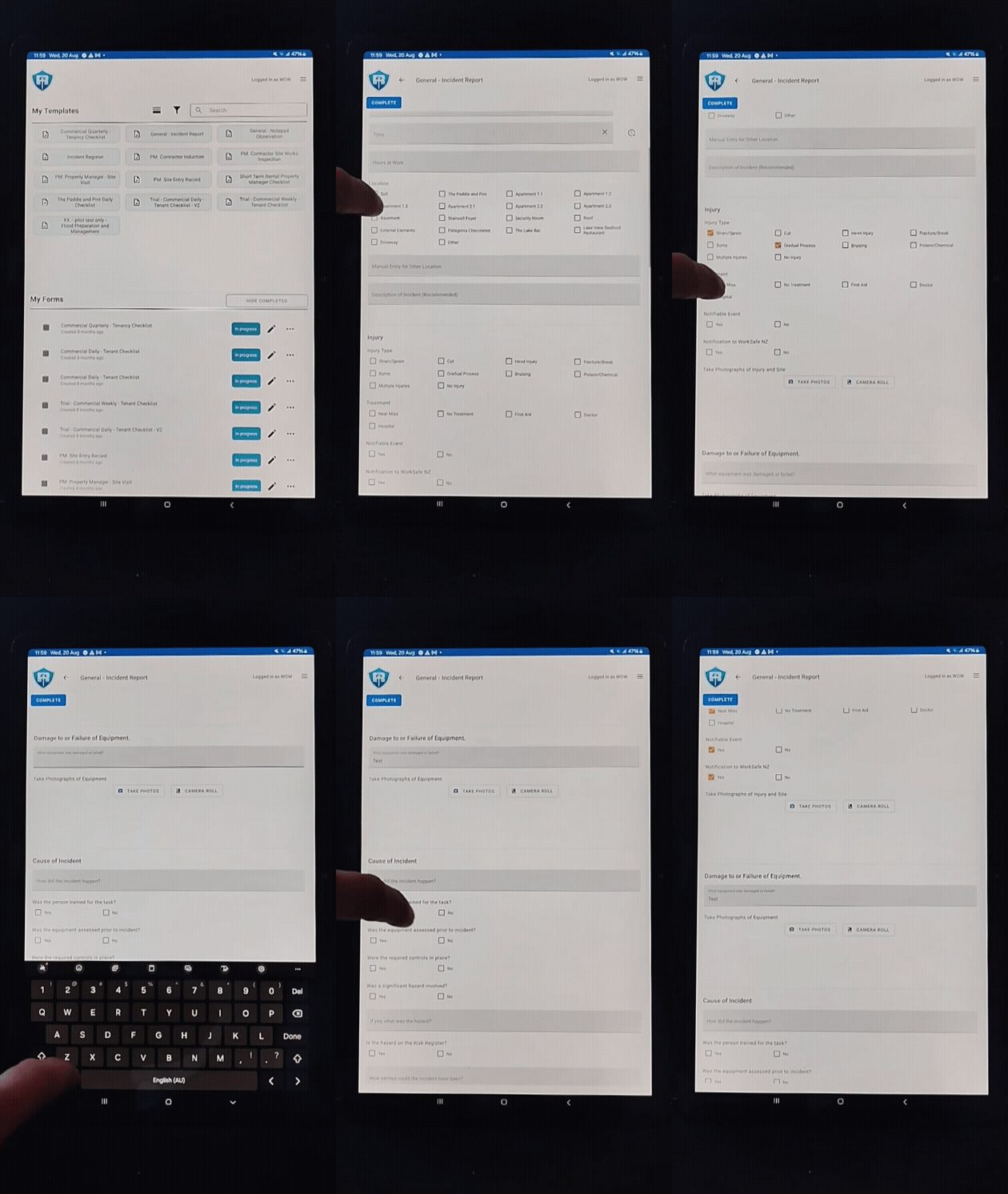
Workflow template functionality
Offline capabilities and auto-sync feature

Offline Functionality

The Risk Mentor platform is built for offline operation, ensuring teams can work without interruption in remote or low-connectivity environments. Data is stored locally on the device and synchronises automatically when a stable Wi-Fi or network connection becomes available. This guarantees that no records are lost and frontline staff can continue working productively, regardless of coverage conditions.

Downloaded information as a decision making aid

Flexible In-Field Information

The types of information downloaded to the app are completely flexible and tailored to the requirements of in-field users, helping them make better real-time decisions.

  • Traffic management plans for relevant work areas
  • Competency records for frontline workers
  • Compliance dates for equipment (e.g. roadworthiness certificates)
  • Approved contractor information
  • Procedures and key references (e.g. TARPs)

Screenshot to come

Prompts for changes to expected site conditions

Key Questions in Workflows

Key questions are included in workflows to prompt in-field workers to rethink their decisions. Prompts around prevailing weather conditions, road conditions, equipment status, and the presence of public or third parties in proximity are all included to help workers make the best decision about how to progress their tasks. In some cases — where conditions are unfavourable — the best decision is to defer to senior team members, who may provide additional resources or endorse rescheduling until conditions improve.

The second video shows how the App can be used to access source material from the database. In this case - the video shows a user accessing a Trigger Action Response Plan (TARP) for weather conditions. The TARP provides guidance on expected responses by field-workers based on the prevailing conditions.

Options to pause, update, or reapprove a workflow

Approval Gates in Workflows

Workflows embed all the requirements of Job Safety and Environment Analyses (JSEAs) and Site-Specific Safety Plans (SSSP). They include structured trigger point questions that, if they cannot be confirmed, prompt workers to seek formal approval before proceeding with the task. When a workflow reaches an approval gate, guidance is provided on the next steps. If the requirements cannot be met, the workflow triggers a reapproval process, typically involving supervisor or manager sign-off before work can continue.

Flagging of new hazards, allowance for environment changes, changes to crews

Key Checks in Workflows

Particularly when a workflow is being used to guide a work team, there are some key checks required. The responses to these checks help frontline team members determine the appropriate next steps. These checks may include direct links to Trigger Action Response Plans (TARPs), ensuring decisions are informed and aligned with safety expectations.

Beyond the application of text information in available form fields - an option is available to enable an actions module on the app. With this enabled, in-field users can create and close out actions - providing commentary and photographic records of the actions taken. The video shows an action being raised and closed out.

Live Dashboards

Dashboards & Drill-Down Insights

Dashboards provide real-time visibility across the portal and the connected Metabase platform. They allow users to drill down into detail on a wide range of items, ensuring leadership and field teams have the insights they need to act decisively.

Review and sign-off of variations

Supervisor Sign-Off & Permit Integration

Workflows include dedicated sections for supervisor sign-off, ensuring critical tasks and permits are formally approved before work proceeds. This provides accountability, traceability, and compliance at every stage of operations.

Review of identified hazards - risk registers

Hazard Controls & Strategic Risk Tools

Hazards in most work environments are generally known. The workflows guide teams in confirming the adequacy of controls in place for those hazards, ensuring they remain effective and relevant. Beyond day-to-day hazard checks, Risk Mentor supports the use of Credible Failure Modes (CFMs) as a strategic tool — offering a more practical and structured approach than continually expanding risk registers. The companion video shows an implementation of identifying hazards during a workflow completion - and then allocating appropriate controls to prevent harm.

Audit Trail

Access to Multiple Sets of Information

Risk Mentor provides access to multiple sets of information, ensuring that users can view dashboards, monitor records, and generate device logs directly within the app. This functionality supports traceability, accountability, and insight into field activities.

Integration with Existing Systems

Training Record Updates

Updates to training records are readily achieved, with changes reflected directly within the app. This ensures that frontline teams always have access to the most current competency information.

Exporting Records

Data Export & Reporting

Risk Mentor supports data export and reporting across platforms. Teams can generate CSV, XLSX, JSON, PNG exports from Metabase, output management plans directly from source information, and produce audit logs for compliance and oversight.

Analytics for Leading Indicators

Activity Records & Leadership Oversight

The platform enables the generation of records of activity, inspections, and leadership interventions. Reports can be configured to deliver value-adding insights that support leadership decision-making, ensuring flexibility while maintaining compliance.

Change Management

Workflow Triggers & Change Management

Workflows include triggers for identifying changes in conditions or requirements. These may introduce stop-points that require a decision before work continues, ensuring safety and compliance. Customisation options allow integration with a dedicated Change Management form or direct connection with external systems, providing flexibility in how changes are managed.

Training - User Guide

Online and static resources available. Frontline build of workflows reduces training and complexity requirements for learning how to use the RM platform.

Role Based Access controls

Role-Based Permissions

The database is structured so that roles define the point of control for create, read, modify, and delete (CRUD) permissions. This ensures that different logged-in users can only access workflows and data relevant to their responsibilities, strengthening both security and operational clarity.

Additional Features

End-to-End Risk Management Lifecycle

Risk Mentor combines all key elements of effective governance into a single system: establishing baselines, guiding safe work through structured workflows, capturing records of activity, and enabling auditing & drift detection. This integrated approach ensures traceability and continuous improvement across the entire safety and compliance lifecycle. Coming soon - video which demonstrates how clauses of relevant statute and standards are connected with workflows in the system.
×
×

Part B — Interactive Competency-Based Training Management Tool

Context & Objectives

The RM integrated solution meets the requirements of Part B by embedding a competency verification step in relevant Field Portal workflows. The status of competencies by person is updated daily from company systems and pushed to the Field Portal, including the NZ EDB Common Competency Framework (CCF) for those working on network assets. Competency details can be organised by work group and depot for efficient field use.

The RM Configured Digital Systems Model provides low-cost bidirectional data bridges to company systems (e.g. HR training records, Learning Management Systems). This enables linking field records to individual profiles, which may be particularly valuable for HEG’s focus on training apprentices.

Fit to Terms of Reference & Options

During pilot work, HEG Utilities Group leaders will advise on the preferred approach from the following options:

  • Option 1: Develop a bidirectional bridge between existing Company LMS or training databases (multiple systems). Records maintained through existing system interfaces.
  • Option 2: Develop a bidirectional bridge with a single Company LMS or training database. Records maintained via the existing system interface.
  • Option 3: Develop an integrated LMS within the RM ecosystem. RM provides infrastructure; records maintained via a new interface across HEG. Not costed in this proposal, but expected to be a low-cost and flexible option compared to standalone LMS.

Table 2 in Appendix 3 and our supporting web page provide further details on how the RM approach addresses the ToR requirements for Part B — Interactive Competency-Based Training Management Tool.

Risk Mentor | Part B Features - Competency Framework
Competency Framework Features
Competency Framework - setup and maintenance

Interlinked process map with relative competencies that can be clicked through as needed. Dashboards generated on training matrix as loaded through the portal or generated from legacy records of training. Refresher requirements provided by automated report or app-based actions.

Competency Framework Setup
Worker skill tracking

Skills Setup & Workflow Integration

The platform provides the ability to set up and manage skills, then integrate these skills into workflows where they are required. This ensures that only competent workers perform tasks requiring specific qualifications or training.

Refresher Training requirements

Refresher Training Requirements

Dynamic training matrix can be used to automatically generate refresher training requirements. This is pushed to management teams via email summaries or immediate alerts via actions module on app.

Compliance management

Compliance Management

Workflows incorporate compliance management controls by ensuring that only people with the requisite skills are able to progress the workflow. If the required skills are not available, the workflow will stop and require external approval to continue.

Skills Expiry alerts

Skill Expiry Alerts & Actions

The system can automatically flag expiring and expired skills across the workforce. These alerts can be delivered via dashboards, email notifications, or through actions generated within the mobile app for immediate attention.

Skills status reports

With all of the information on workers skills loaded into the database - it is then a straightforward process to generate skills reports for the RM site. Skills reports - as a PDF or a data table will provide a summary of skills that would historically be loaded to the organisation's intranet or safety website.

Ease of maintaining competency requirements

Competency records are maintained as top-level objects in the RM system. (Typically using document metadata in the backend). This makes the creation, editing and updating of records very simple. So when a new person arrives or an existing person completes a qualification - it can be captured very quickly.

Training dashboard information

Training dashboards provide guidance on the status of skills. These are flexibly generated from the RM database.

Trainer provider records

Training records are stored as objects (document metadata) in the RM platform. Information provided by training organisations can be held for auditing - or, in some circumstances, training records from providers could be exchanged by the application of Application Programming Interface (API).

Realtime reporting for workers and teams

In the first instance drop downs provide guidance for frontline teams that the people being deployed to jobs are appropriately skilled for that job. Additionally, live dashboards can be used to provide real-time visibility of skills status across teams.

Management of variation

Where workers present on a job do not have the required skills - then this triggers a stop-job action and escalation to management. Management (supervisors or managers) can then provide an approval if other risk mitigations are deployed to manage the situation.

Synching functionality

Mobile devices, when synched, are updated with all relevant training records. Also, records of skills used in the execution of a job in-field are synched back to the RM database.

Integration options

Similar to records from systems such as SAP and Maximo - scheduled data summaries from other applications can be delivered to the RM database for consumption and deployment to field teams.

Information and Summaries for team members

Multiple summaries are possible.

Worker skills currencies. Supervisor summaries of skills mix and upcoming refresher requirements. Management summaries on trends in skills acquisition and current capability within the organisation.

Alignment with Electrical Distribution Industry

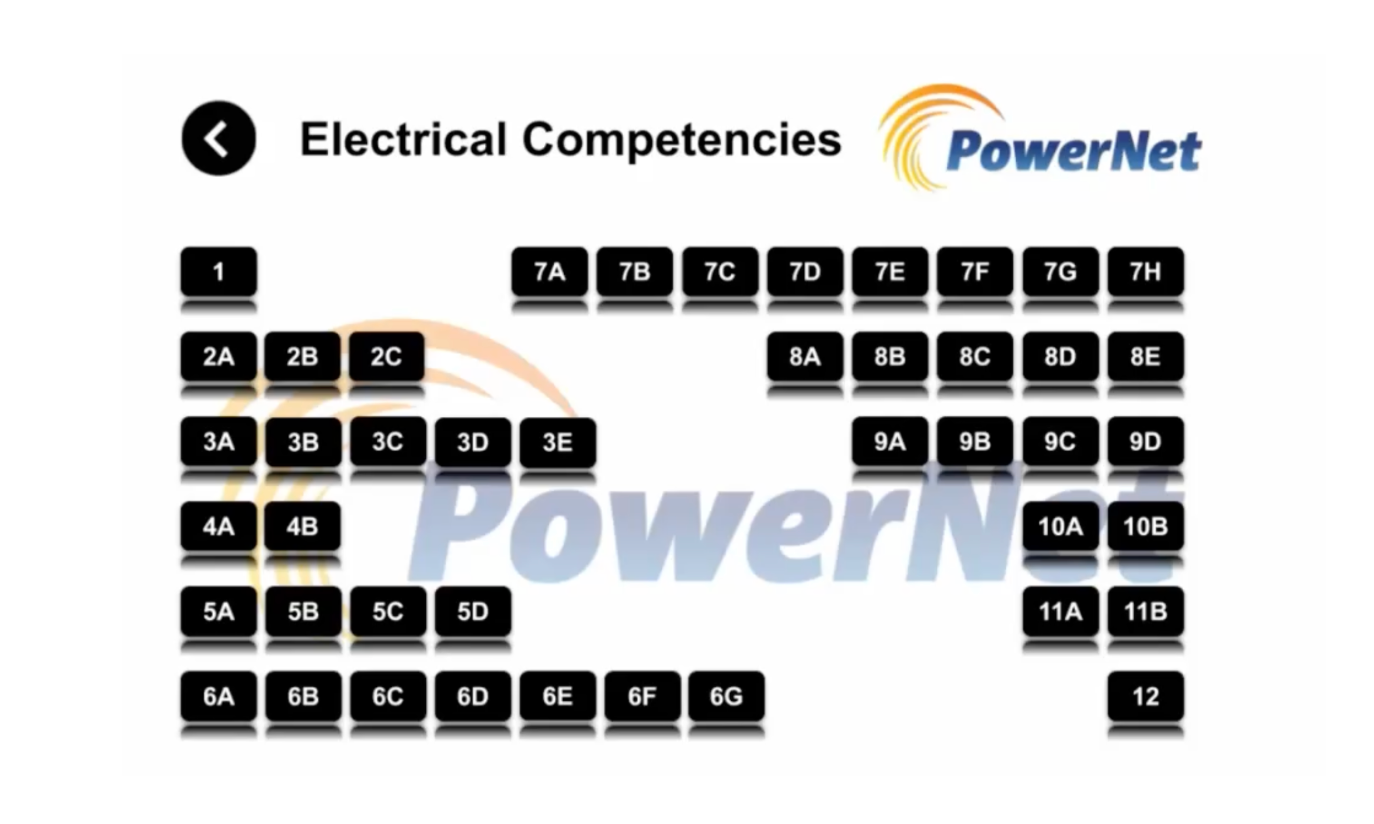
The PowerNet sample shown in the video references the EDI skills codes and their application.

Real time variation management

Similar to information and summaries - absence of available skills can be readily highlighted and addressed with appropriate in-field interventions.

Ease of use

Training currency records are available as drop-down items in workflow forms. Training records can also be reviewed and updated directly via the web portal, making administration straightforward.

Compatiblity with other systems

The RM solution allows for low-resource integration with other systems. In the sample video drop-downs are generated from SAP and Maximo data sources - allowing RM workflows to reference the external information.

Implementation overview

RM have worked with other clients in the preparation of online courses. If HEG are interested in this - then these courses can be linked to within the RM app. On completion of a micro-course certificate of completion records can be loaded to the platform. This aligns with HEG practice and ensures that workers who have attended the online micro-courses as a component of the skills development and refreshers have been verified as competent to exercise those skills.

×

Part C — Equipment Safety, Certification & Compliance Management System

Context & Objectives

RM Integrated Solutions in other sectors have been successfully configured to manage all aspects described in the Terms of Reference. This includes equipment safety, certification tracking, calibration management, and compliance monitoring, ensuring assets remain safe, reliable, and audit-ready.

Fit to Terms of Reference

Table 2 in Appendix 3 and our supporting web page provide details on how the RM integrated digital approach can meet and exceed the ToR requirements for Part C — Equipment Safety, Certification, and Compliance Management System.

Risk Mentor | Part C Features - Equipment Management
Equipment Management Features
List of equipment and categories

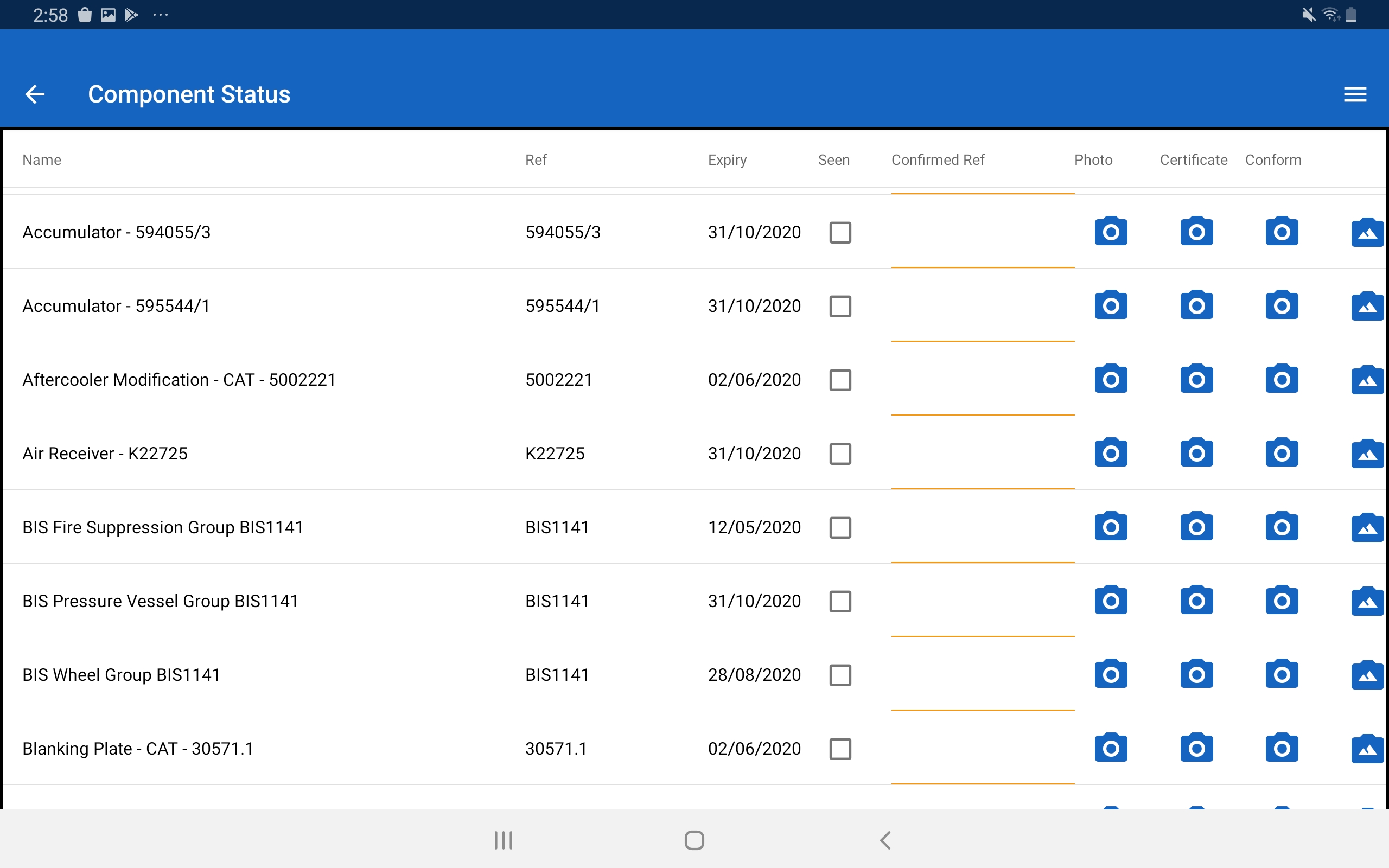
The RM Platform has a class of objects - Machines - which can contain any number of components. Other classes of objects are Users - Organisations - Actions - Workflow Templates - Workflow Instances - Groups - Dashboards - Files - Reports. The video demonstrates the navigation to the machines class, and from there - the selection of one machine to show associated components. The list of machinery and components is available on the App as a drop down and to desktop users through the web portal.

Compliance testing dates

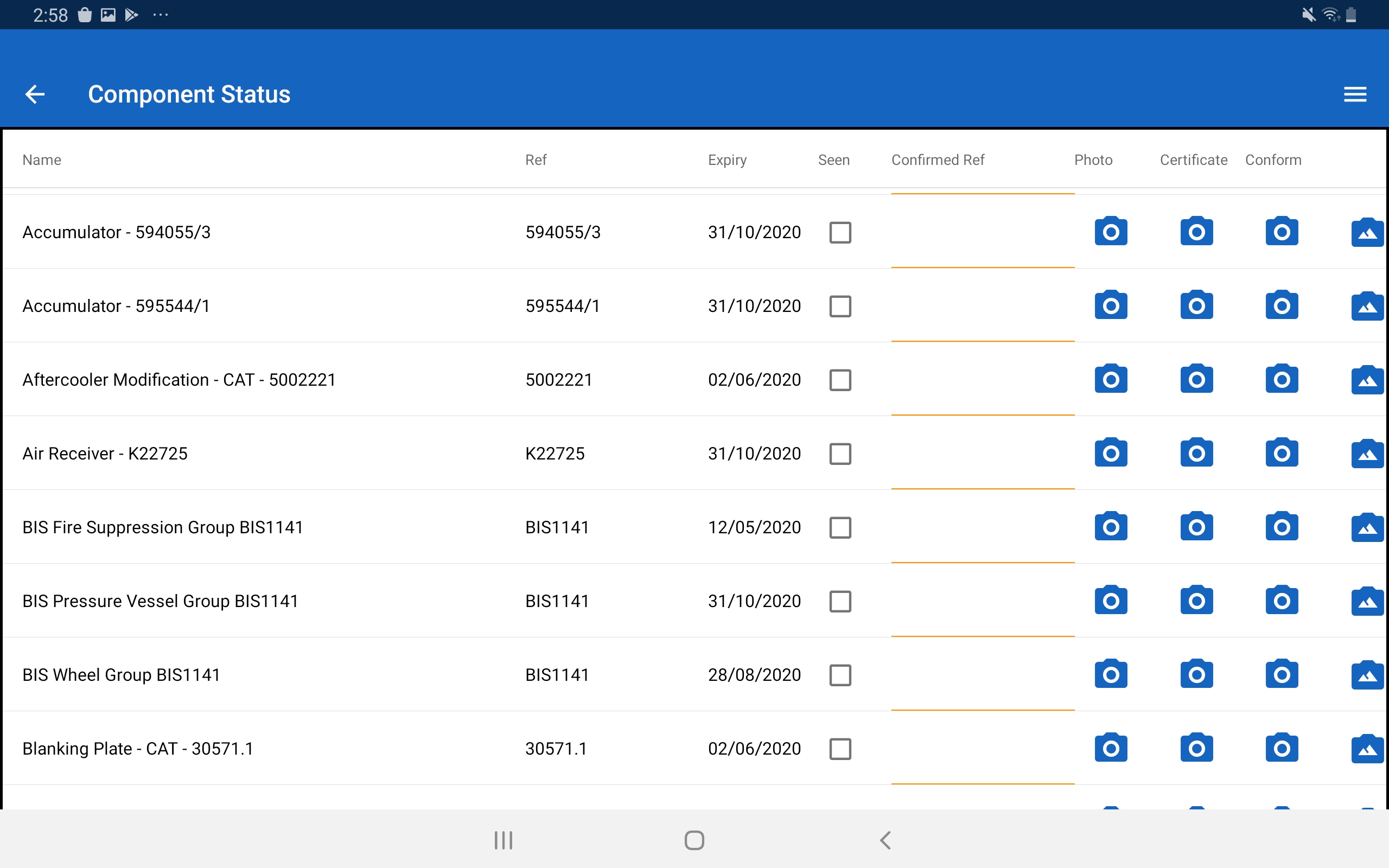
From the listing of components the various certificates and documents connected can be analysed. The video shows a compliance status report on components.

Compliance certificates and calibration certificates

The video shows how the additional information on the supporting documents for each component can also be extracted from the report. This opens to the actual certificate or stored information for audit or regulatory purposes.

Compliance and Calibration expiry alerts

The compliance status report can be used to trigger expiry alerts from the system. These can take the form of emails or automatically generated actions on the app.

Assignment of equipment (to people or vehicles)

RM components and machines have an ability to be assigned to one or more role holders. The video shows the assignment of ownership to equipment and the follow on to creation of drop-down lists in workflows.

Bulk uploads to maintain data

As for other similar questions - the system allows for multiple ways to enter information. Where there is an existing equipment register - this can be uploaded to create the RM machines and components classes. Where SAP or similar applications already have the information - then records can be integrated by scheduled updates from the external applications. Where training providers or calibration companies can be engaged - they can supply data files to be upload from existing structures.

Realtime reporting of equipment state

The component status report addresses the known information on the equipment. In-field reports on equipment state occur through the workflow functionality. For instance, if a workflow has a trigger-point question about the safety rating of a harness, and upon checking, it is found that the safety certification is out-of-date or that the harness is damaged - then this can be reported back for action.

Management of variations

As for variations to training and process steps - the in-field mobile app can provide reminders and checks on equipment at critical steps. If these checks cannot be satisfied (or there are variations present) then these are captured in the workflows - or trigger escalation or actions to be completed. In this way - variations are able to be actively managed. For instance, if harnesses are required for working at height, a workflow can check that harnesses are present and in-certification. If not, the workflow stops and requires additional harnesses to be brought to site before the task continues.

Synching

Synching of component and equipment information occurs in a similar way as for other aspects of the RM platform. Records are synchronized between the mobile devices and the central database, ensuring all teams have access to the latest equipment status and certification information.

Synching functionality
Integration for field and supervisory staff

Dashboards and updated drop downs achieve integration of information across the organisation.

Information for key role holders

As for other points - information is available via dashboards and can also be the source of follow up actions for any organisational role.

Equipment compliance with Electricity Industry requirements

RM achieves demonstrable compliance in a number of ways.

  1. Specific requirements of the SMEI are codified into workflows (i.e., a ladder workflow would only permit one worker on a ladder at a time, and that workers must have completed BSAFE height training).
  2. Source information for regulatory requirements is preloaded on the mobile devices, available for reference by all field staff.
  3. The database can be used to query the linkages between procedural requirements and the practices to test that they are linked effectively (this is done through the desktop portal). This is particularly relevant for Electricity Industry requirements and other regulated industries.
Real-time variation management

Where equipment is non-conforming (as for management of variations) it can be flagged for frontline teams. Escalation and intervention pathways are then available.

Escalation pathways to supervisors

Workflows have trigger points to communicate with supervisors. There is also the ability to add a communications layer within the Risk Mentor platform to allow for secure notifications being raised and addressed. This can integrate with email and actions modules as required.

Compatibility of information flows to and from other systems

Similar to other aspects - where other systems are the location for single-point-of-truth data, then scheduled updates can populate the RM database. This allows RM mobile devices to present the correct information to field teams. If errors are found, they can be corrected and fed back.

Implementation overview

This is covered in the WBS in more detail. In brief, the intent would be to:

  1. Generate equipment and components lists
  2. Upload current certification information
  3. Update workflows to reference relevant equipment where required
  4. Develop maintenance of information processes so that fresh certifications are captured when they occur
×
RiskMentor Footer x